

New builds · Guide
Building or Renovating in Auckland in 2027: Why the Work Starts Now
Why a 2027 build or renovation in Auckland is decided in the last weeks of 2026, and the brief, budget and team decisions worth settling before the Christmas break.
If you are planning a build in Auckland for 2027, the work that decides your start date happens in the last weeks of 2026. Auckland's mild climate lets construction run year-round, so the season rarely holds a project back. The runway does: design takes months, building consent comes after it, and most trades stop for two to three weeks over Christmas and New Year.
That applies whether it is a new home or a major renovation. The decisions that set your start date are made before anyone picks up a tool.
Why does a 2027 start depend on decisions made now?
Because nothing gets built until the design is finished and consented, and those steps take months between them. Start design in late spring and you are realistically breaking ground months later, not weeks.
Consent is the predictable part, as long as the application is complete. Gaps in the drawings or engineering bring requests for information, and each one stops the clock. Our guide to Auckland building consents covers what triggers one and how long council takes.
How does the Christmas shutdown affect the timeline?
Most trades stop from just before Christmas into January, typically for two to three weeks. It is a fixed point in the Auckland building year, so plan around it rather than discover it.
What matters is where you are when it arrives. With a brief agreed and a designer engaged before the break, design picks up the moment everyone is back. A brief still being argued over in December usually means starting cold in the new year. If you already have consented drawings, use the break to finalise selections, so the build is not waiting on you when work resumes.
What should you settle before the break?
Four things do most of the work:
- The brief: how you want to live in the house, what must stay, and what you would trade away first.
- The budget: a total project number, including contingency, not a build rate.
- The team: choose your architect and your builder early, so the design is priced as it develops.
- The site: existing plans, a survey, and a check of your address on Auckland Council's Unitary Plan viewer for overlays that could require resource consent.
None of this needs a finished design. It needs clear thinking, written down, and the right people involved early enough to act on it.
What budget should you set for a 2027 project?
Set a total project number before design starts. On 2026 Auckland industry averages, an architectural new build starts from around $4,300 per square metre for the build alone, plus 20 to 30 percent for site works, consents, design and contingency, and high-end renovation runs roughly $3,500 to $7,500 per square metre depending on scope and finish. Those are averages, not quotes, and every price is subject to site specifics. Our renovate or rebuild guide compares the two routes, and our architectural home cost guide goes further on new-build numbers.
Why involve a builder before the drawings are finished?
A builder involved early can price the design as it develops, so the drawings that go to consent are drawings you can afford to build. Bring one in only once the design is finished and you often end up redrawing to bring the cost back, which spends the time you were trying to save. Early involvement also means the builder sees the site before the design is fixed, so access, slope and ground conditions are allowed for rather than discovered.
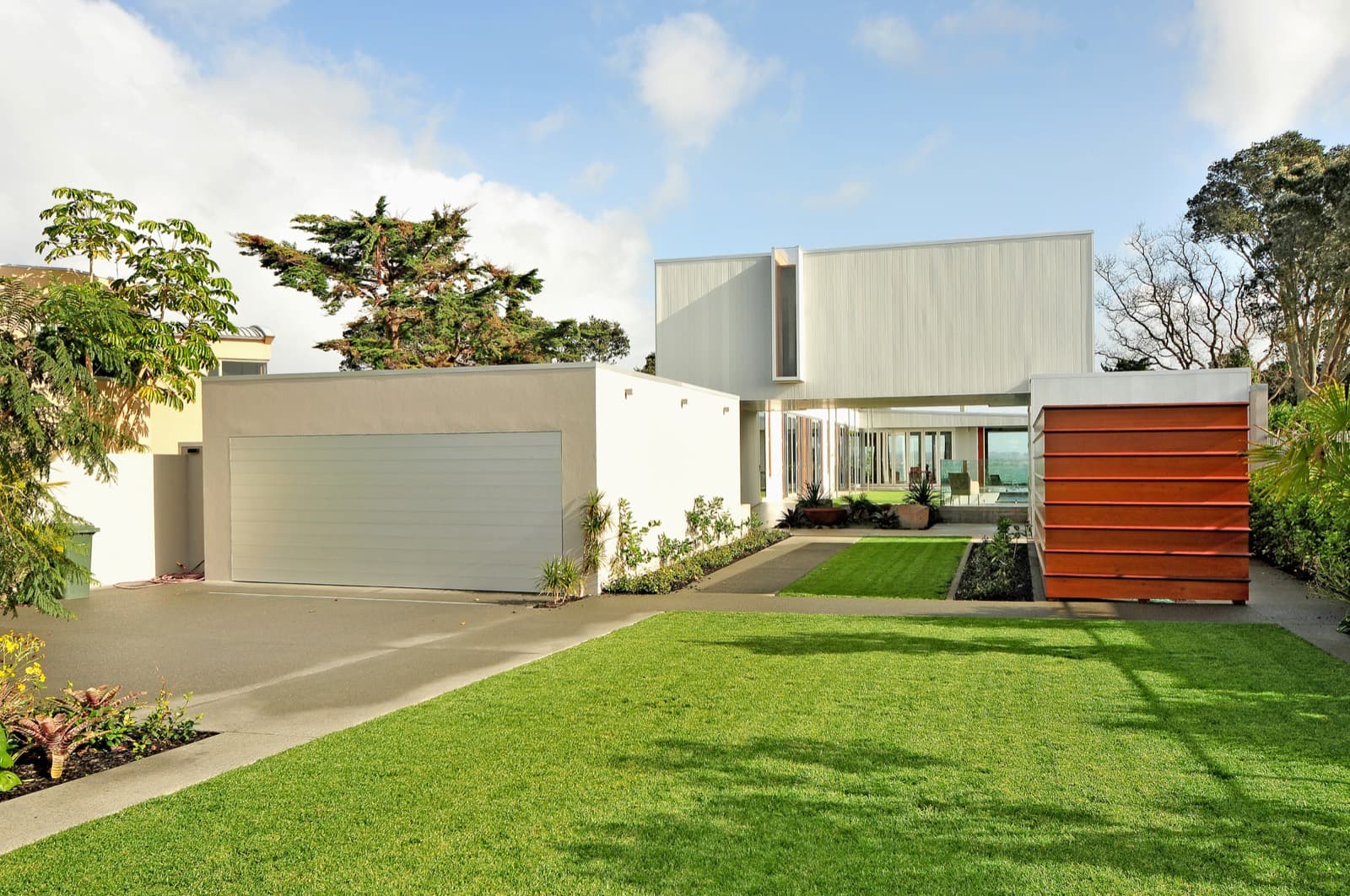
We start with a consultation on site, which we charge for. You can see where that leads in finished work, from the Challinor renovation in Mt Albert, with its open-plan living, deck and saltwater pool, to the One Tree Hill new build, which won Gold and Gold Reserve at the 2009 Master Builders House of the Year awards.
What protections should be in place before work starts?
For residential building work over $30,000 including GST, the Building Act requires a written contract and a disclosure statement, under the Building (Residential Consumer Rights and Remedies) Regulations 2014. The disclosure statement sets out who the builder is and your rights under the Act. Read it as carefully as the contract.
Know which kind of contract you are signing. A fixed price sets the cost for the agreed scope, while charge-up, also called cost-plus, bills the actual cost of labour and materials. Either way, agree how variations (changes to scope or cost during the build) are priced and approved. And once the work is complete, the Act gives you a 12-month defect repair period, during which the builder must put right defects you notify.
Start the conversation this year
The brief, budget and team cost nothing to change before the break, because nothing has been drawn or ordered yet. One conversation now can tell you whether your timing is realistic and what has to happen first to make it so.
If you are planning a new build or a renovation for next year, our guide to how long a build takes sets out each phase. When you are ready to talk about your site, Talk to Finn. We will help you work out a realistic start date and what it takes to reach it.
Common questions
When should I start planning a 2027 build in Auckland?
Now, if you want to be on site in 2027. Design takes months, building consent follows it, and most trades stop for two to three weeks over Christmas and New Year, so a brief settled before the break saves weeks.
Do I need a written contract for building work?
Yes, for residential building work over $30,000 including GST. The Building Act requires a written contract and a disclosure statement under the Building (Residential Consumer Rights and Remedies) Regulations 2014.
What is the difference between a fixed price and a charge-up contract?
A fixed price sets the cost for the agreed scope. A charge-up contract, also called cost-plus, bills the actual cost of labour and materials as the work happens. Under either, agree how variations to scope or cost are priced and approved before you sign.
What happens if something is wrong after the build is finished?
The Building Act provides a 12-month defect repair period after completion. During that year, the builder must put right defects you notify.

Free planning guide
Not ready to talk to a builder yet?
Finn's free 20-page planning guide covers the order of a build, what it costs, how long it takes, and the questions to ask before you sign anything.
Building or renovating in 2027?
Tell us about the site and what you have in mind. Finn will help you work back from a start date to what needs doing before the break.